The Problem of Evil

I am profoundly disturbed about the problem of evil. Indeed, it would be the one single factor that would cause me to question the existence of a loving God. I often wonder why there is such pain and suffering in the world. To be perfectly honest, I have yet to find a satisfactory answer to this problem that plagues the human race.

We do not have to look far to see evidence of evil. Any list, be it every so lengthy, would still be incomplete. Nevertheless, please allow me to provide you with some examples of the evil that surrounds us every moment of every day. A cursory glance at any daily newspaper would result in multiplied examples of human suffering.

Why do individuals suffer unbearable pain? Why are children born with birth defects? Why are people daily diagnosed with cancer and other diseases? Why are there droughts that lead to the starvation of innocent millions? Why do tornados, hurricanes and other natural disasters strike, leaving carnage in their wake? Why are there nuclear threats? Why are there suicide bombings, often in the name of God? Why do sadistic tyrants attack and destroy entire villages, and even countries? Why is there rape, mutilation, torture, dismemberment and murder? Why does much of the world still live in grinding poverty? Why are children killed in car accidents? Abused by those in positions of authority? Senselessly taken by leukemia and other diseases? Flu epidemics, Alzheimer’s disease, genocide, racism, sexism, Rwanda, civil war in Iraq, malaria. Why are animals abused? Why is there divorce and broken families? Why do individuals suffer the pain of lost jobs, lost income, failed prospects? Before long, you will lay aside the newspaper. The examples of evil in our world are too many and varied to barely contemplate.

In short, where is God in all of this evil and then some?

There was a time when I felt I knew all the answers to life’s most thorny problems. But that was when I was much younger and immature. I look back with shame and embarrassment when I recall the times I analyzed the problem of pain and offered answers that today I would regard as pat and inadequate. With age and experience, though, I now have fewer answers and more questions.

Admittedly, there are those who are not bothered by the problem of evil. I envy those individuals their confidence. At times, I wish I could put aside my questions and accept unquestionably the pet pious platitudes I would have dished out in the early days of my ministerial career.

In wondering about the problem of evil again in recent days, I turned my attention to reading the book, God’s Problem: How the Bible Fails to Answer Our Most Important Question–Why We Suffer by Bart D. Ehrman. He takes the reader on a tour of the Bible, pointing out all of the answers given therein to the problem of evil. There is not, he suggests, one definitive answer to this problem. Instead, it offers several answers. And, in his opinion, none of them are adequate to explain suffering.

There is a logical problem that needs to be solved to explain the suffering in the world. This problem is made up of three assertions that appear to be true. However, if they are true, they appear to contradict one another.

First, God is all powerful.

Second, God is all loving.

Third, there is suffering.

Of course, the question naturally arises: How can all three be true at the same time? If God is all powerful, then he is naturally able to do whatever he pleases. Which means, of course, that he is able to remove suffering. If God is all loving, then we can assume he wants what is best for people. Which means, of course, that he does not want them to suffer. But the harsh reality is that people do suffer. How can this assertion be reconciled with the first two assertions?

The classical view of suffering is that God is punishing people for their sins.

A second biblical view is that some suffering is caused because people have the free will to hurt, maim, torture and kill others.

A third view is that God can bring good out of suffering.

A fourth view is that suffering is caused by forces opposed to God.

A fifth view is that suffering comes as a test of faith.

A sixth view is that suffering is simply the way things are, so just accept it and move on.

A seventh view is that God will eventually make right whatever is presently wrong with the world.

One problem–many answers. Perhaps there are many answers simply because any one answer fails to adequately answer the question of suffering.

While I am fairly confident about many aspects of Christianity, I must remain what Leslie D. Weatherhead called a “Christian agonstic” when it comes to the problem of evil in the world. Actually, one could be a lot worst than agnostic about certain aspects of one’s faith. I have made a conscious decision to leave the problem of evil in a mental box labeled “Awaiting further light.” In all likelihood, I may never come to a rationale for the problem of evil that will answer the question to my satisfaction. So much in the world is unintelligible, and the problem of evil is, in the end, insoluble.

Meanwhile, one question of great importance remains: How do I, as one who lives in a world where evil is endemic, work to alleviate suffering and bring hope to individuals devoid of hope? How can I do more to deal with the problems people experience in our world? Am I working to my utmost to make the world a better place, not just for myself, but for others? What am I personally doing to alleviate suffering?

Whatever became of Pearson’s Peak?

Pearson's Peak0002As soon as I spied the postcard at an auction, I knew I wasn’t “losing it.”

It’s a depiction of our province’s so-called Trans-Canada Highway Tower, more familiarly known as Pearson’s Peak. According to a notation on the reverse, the rock pillar was erected at the halfway mark between Port aux Basques and St. John’s to commemorate the completion of the TCH in Newfoundland.

I vividly remember as a child driving with my parents and siblings past this imposing object which towered above the trees just off the highway. Truth be known, I seem to recall leaving the road and driving up the 100 or so metres to take a closer look at it.

However, in recent years, I haven’t seen Pearson’s Peak in my frequent trips across the island. I often wondered what had happened to it. Had it fallen down or been dismantled? Or, as seemed more likely to me, had the highway taken a different course, bypassing it altogether? Will I ever learn the truth? I asked myself.

Not long ago, while on a research trip in Alberta, I asked my brother about Pearson’s Peak. Being older and, I suppose, wiser than me, David suggested the answer would probably be found on the internet. All he had to do was type these words into a search engine: “halfway marker across Newfoundland.” Everything I wanted to know about the monument was there in plain sight.

Mark Richardson, in a blog about a trip he took on the TCH, explains, “When Premier Joey Smallwood drove west from St. John’s in 1965 to greet Prime Minister Lester B. Pearson, who was driving east from Port aux Basques, they met just outside town (i.e., Grand Falls) here at the halfway point of the fully paved Trans-Canada Highway. In doing so, the TCH was declared complete across Newfoundland. ‘We finished this drive in ’65,’ declared the signs and posters. ‘Thanks to Mr. Pearson.’ ”

Pearson had agreed to fund 90 per cent of the total cost of constructing the road. His intention was to finish it while he was still in office. According to Richardson, “the province set to with vigour while Smallwood knew the funds were available.”

The Newfoundland premier, wanting to show appreciation for Pearson’s largesse, decided to erect a monument at the halfway point. A rock pillar, roughly 25 metres high, was put in place. Named Pearson’s Peak, it commemorated the generosity of the feds.

Incidentally, Maclean’s magazine published a photo of Pearson preparing to unveil his plaque at Pearson’s Peak.

That was the very object I had seen as a child crisscrossing the province with my family.

“But there’s nothing there now,” Richardson notes. “Nobody here is quite sure what became of it. Longtime residents recall that it fell into disrepair after the two backslapping Liberals left office; it became unsafe, with pieces of rock sometimes falling from it near the cars that were parked by amorous couples. There was nothing else to do there, after all–no picnic area or green space, just a circle of asphalt surrounded by bush with a pillar in the middle, about 100 metres up from the road.

“The province chose the cheaper option by dismantling it instead of repairing it; again, nobody is quite sure when, though it was probably 15 or 20 years ago. The entrance to the paved drive was dug up to prevent cars from going in, and aside from some rubble and firewood sticks, there’s nothing whatsoever to mark the spot.

“What happened to the bronze sign on the peak? Apparently, it was found at a landfill site, but where it went then, no one can–or will–say.”

Perhaps it’s reflective of my age, but I lament the destruction of Pearson’s Peak. Meanwhile, my personal postcard collection now contains a pictorial representation of the marker.

My brother, ever the wag, quipped, “You will have to worship elsewhere!”

The Philosopher and the Minister

Mumma0002In the early 1950s, Albert Camus (1913-60), the famous French existentialist writer, visited a Parisian church, to hear a well-known organist perform.

Intrigued by the philosophy and theology of the guest preacher, Howard E. Mumma (1909-2004), Camus invited him to lunch…and a surprising friendship developed.

Through the ensuing years, Camus explored the Christian faith with Mumma, in discussions that offer a deeply personal side of the philosopher previously unseen by the public eye.

Over their first lunch, Camus confided in Mumma his secondary reason for attending church: “I am searching for something I do not have, something I’m not sure I can even define.”

Camus shared his personal story…the death of his father when Camus was one year old, being raised by his mother and aunt in abject poverty, suffering with tuberculosis as a youth, witnessing the atrocities of Hitler as an adult.

“This is why,” Camus confessed, “I am always on the verge of denying that life has any meaning or that the existence of a Supreme Bring could bring meaning to this world…. When it comes to man’s most basic questions of meaning and purpose, the universe is silent…. In a word, our very existence is absurd…. For me, the only response was to commit…intellectual or physical suicide, or to embrace Nihilism…. I am a disillusioned and exhausted man. I have lost faith, lost hope…. Is it any wonder that, at my age, I am looking for something to believe in?…. It is impossible to live a life without meaning.”

Camus’ head was lowered. Sadness blanketed his face–depression glazed his eyes.

It suddenly dawned on Mumma: Camus, “the wearied existentialist,” was a soul searcher who desperately desired to experience faith.

During their chats, the duo discussed the problem of evil, conscience, imago deo, sin. Mumma gave Camus a Bible, and he was excited by its stories.

One day toward the end of Mumma’s summer in Paris, Camus asked him an unusual question, “Do you perform baptisms?”

“Yes, Albert, I do.”

Camus asked the significance of this rite.

Mumma later wrote that Camus “seemed more than merely curious, rather contemplative, as if this question was more personal to him.”

They discussed Nicodemus, but Camus could not grasp Jesus’ statement, “You must be born again.” Mumma defined the term for his friend: “It is to receive forgiveness because you have asked God to forgive you of all past sins, so that the guilt, the concerns, and the mistakes that we have made in the past are forgiven and the slate is truly wiped clean.”

Camus focused on Mumma and, with tears in his eyes, admitted, “Howard, I am ready. I want this. This is what I want to commit my life to.”

Mumma rejoiced that Camus had reached a moment of existential decision. Yet, the minister said, “Perhaps, you are not quite ready…. Let’s wait while you continue your studies.”

Later, Mumma thought to himself, I’ve always believed that no one is beyond the reach of God. Still, all this seems too incredible to accept.

Soon after, Mumma returned to his American home.

Albert Camus died shortly later.

“I remember the evening when the news brought word of his death,” Howard Mumma recalled. “I was shocked, unable to move…. This was a man I knew well…. When I thought again of Albert Camus’ last request of me, I sank a little lower.

“I wondered again if I had made a mistake in not honouring his request.

“It is plain to me,” Mumma continued, “that despite how hard I tried, I failed Campus, and the consequences were tragic.”

Some years later, when Mumma was again in Paris, he was driven on a countryside road. The driver pointed out where Camus was killed in a car accident. As Mumma stared transfixed at the spot, he lamented his “failure to restore faith in my friend, Albert, at least enough faith to stave off what to me was obviously suicide.”

A Broken Mind

outloud-128x197Mental illness, in all its various manifestations, is a heavy burden to bear. Certainly for the sufferer himself. But, also for those who suffer along with the one afflicted with mental illness…family and friends.

My thoughts about mental illness refused to jell until I picked up a book published by Breakwater Books and supported by the Canadian Mental Health Association – Newfoundland and Labrador Division. Out Loud: Essays on Mental Illness, Stigma and Recovery is comprised of more than 50 essays written by people affected by mental illness.

According to the publisher, this “ground-breaking collection” includes individuals “who have experienced mental illness themselves, family and friends, community members and professionals who deal with mental illness.” Their voices speak of “hope, pain and honesty.” The significance of the collection lies “in the courage and willingness of the essayists to…share their experiences,” the intention being to lessen stigma and broaden discussion of mental illness.

My friend, Marylynne Middelkoop, contributed to the book. I later asked her why.

“Abuse alters a person,” she replied. “It affects how they think, act and relate to the world around them. The effects of my abusive history permeated every relationship I tried to develop, left me with an inability to trust, and destroyed any sense of self I had, exacerbating the emotional challenges I already faced.

“When I finally sought help and began to learn these things, it became my heart’s desire that no one else suffer as I did. I believed that if I could use my past experience to help just one person, it would make the pain easier to bear.”

A second question I asked Marylynne concerns the role faith in God plays in sustaining her in her personal journey.

“I cannot judge anyone for how they deal with life’s curve balls,” she responded. “People cope the best way they know how, and I was/am no different.

“When I was young, I coped with my intense emotions by hurting myself–using tangible pain to over-ride the intangible–and by imagining scenarios as I wanted them to be. In my young adulthood, I ate and drank to excess in order to dull the pain.

“To date, even though I know they are ineffective in the long run, I still sometimes revert to old patterns of behaviour when I get overwhelmed.

“While I firmly believe that my faith in God (and position in Christ) is the real source of my healing, I feel there is no shame in seeking the help of a mental health professional or counselor. I have learned much, and benefitted greatly, from being able to talk things out with them.

“People with mental illness are not stupid, lazy or inherently dangerous; they are ill. Just as diabetes and epilepsy are diseases that require medication to control, so too do certain mental illnesses. I find it sad that so many of the unaffected fail to understand this.

“In the end, I can only share my experiences with others, and what has helped me in my journey from darkness. The rest I must leave with God.”

Some years ago, while I chatted with a psychologist, he asked me, “Burton, what would you do if you had a broken leg?”

“Go to a doctor,” I replied.

“Well, then,” he said, “wouldn’t you do the same thing with a ‘broken mind’?”

What’s in Your Box?

Sweet Assorted0004A TV ad for a certain credit card ends with this question, “What’s in your wallet?”

Perhaps the question that should be asked Jim Christy is, “What’s in your Peek Frean’s tin biscuit box?”

I will explain, but first, a bit about the man himself.

Christy is an artist, author and traveler. He has exhibited his art internationally. He has written more than 20 books. His travels have taken him from the Yukon to the Amazon. He was raised in Philadelphia, but moved to Toronto when he was 23 years old. Becoming a Canadian citizen, he currently resides in the township of Stirling-Rawdon, Ontario.

His gem-of-a-book, Sweet Assorted: 121 Takes From a Tin Box, was published by Vancouver’s Anvil Press in 2012.

“For nearly 40 years,” Christy writes, “I’ve had this metal Peek Frean’s box into which I’ve tossed items randomly, willy-nilly and with neither rhyme nor reason….

“Going through the box, taking inventory, has meant one discovery after another….

“When I began rifling through the box this time, I realized there was a story behind every item….”

Christy relates the story behind 121 objects stuffed into his tin box. According to his publisher, the reader will find “half-finished notes, scrawled snippets of conversation, observations made on the run, photographs of people known and unknown, scraps of paper with puzzling sketches on them, receipts, match packs, postcards, and other assorted paraphernalia.”

Postcards piqued my interest.

There’s one from St. Augustine Alligator and Ostrich Farm.

A second features the person everyone called Miss Sweden. “She was friendly and talkative but not given to reminiscing. She was pleasantly pudgy, wore harem pants, loads of jewelry, veils, leis and a halter top emblazoned with the legend ‘Sweden Social Democrat.’ “

A third is a colour picture of a decorated van.

Yet another is from Ravenna, Italy.

I’m intrigued by the photographs.

There’s one of Bar El Galeon at El Progreso, Yucatan, Mexico. There’s another from Buenos Aires, and two from Saigon. Yet another is a studio photograph of Joseph Isaac “Ike” Clanton, taken at Tombstone, Arizona, in 1880, the year before he and his brother Billy were gunned down by the Earps and their dentist pal, Doc Halliday.

There’s a 46-cent Canadian postage stamp featuring a drawing of Guy Lombardo, “probably,” Christy suggests, “done by someone who was not a fan. It looks like a goofy Guy, a real square at the party, looking for a lampshade.”

Coins caught my attention. There’s a Kennedy half-dollar, as well as a 50-cent piece from the Kingdom of Swaziland, and a bright Cuban peso coin.

I wonder how many of us have our own “tin box.” Well, it may not be an actual box; it might be something as simple as a file folder. I have one with the heading of “Keepsakes.” It’s bulging with this, that and something else. While writing this article, I dipped into it, to see what I had collected over the last three decades.

There’s a booklet, The Adventures of Pac-Man which, according to an inscription on the cover page, belongs to my son, Christopher. There’s a depiction of a boat, Hayley, Caleb & Hannah, drawn in church by one of the siblings and passed along to me.

There’s a postcard from one of the young people in my youth group who had relocated to British Columbia. The front is a drawing of a bald man, along with the words, “Bald is beautiful. God only made so many perfect heads. The others he covered with hair!” Touche.

There’s a letter I wrote in 1980 to my dearly beloved, Sherry, with this probing question, “By the way, what are we going to do on the night before we’re married?” I’m not going there.

There’s a postcard with this inscription on the reverse, “Hi, there. From Sally Field.” Sally Field? Wherever did I get that?

There’s a Merchant’s Coupon Book, produced in the first decade of the last century. I bought it at some auction, but I don’t recall which one. There’s an Autumn 1946 booklist from SCM Press. There’s a booklet about Gillett’s Cream Tartar from E. W. Gillett Company Ltd.

There’s a sawmill return, produced by the Commission of Government’s Department of Natural Resources, St. John’s, in 1943. There’s an announcement of the 1939 Royal Visit to Newfoundland. And, there’s a Darren Langdon hockey card I picked up for my son.

On and on it goes and, admittedly, I wonder today why I kept some of this stuff which, at the time, obviously meant something to me.

In short, there’s something for every taste in my Keepsakes file, as well as in Christy’s book.

What’s in your box?

Robert Parsons Writes About Murder on the Rock

Murder on the RockMy late mother was a Burton–you can now guess the origin of my given name–from Beaumont (once known as Ward’s Harbour), on Long Island in western Notre Dame Bay.

On 22 August 1883, another Burton, Lemuel, undoubtedly a relative of mine, made an enigmatic discovery near the beach at Ward’s Harbour…the skeletal remains of a male.

As Burton lifted the skull, a bullet, blood-red in colour, dropped out. The macabre object quickly posed several key questions in the community and surrounding area.

No one at either Ward’s Harbour or on Long Island had gone missing within recent memory.

“The only satisfactory conclusion the people could arrive at,” writes Robert C. Parsons in his most recent book, “was that of an Indian, a Beothuk.”

This “death at Beaumont,” as Parsons entitles this chapter, is but one of 59 shades of life’s unusual events. In Murder on the Rock: True Crime in Newfoundland and Labrador, a sequel of sorts to his Courting Disaster (2009), he offers takes of people who, he suggests, “thought they would not be caught.”

All of the stories on tap here relate to the sea, which is not surprising, considering Parsons’ considerable experience in chronicling Atlantic Canada’s ships and ship disasters. To date, he has written more than 25 nonfiction books.

“The sea,” he explains, “governed our ancestors’ travel, economy, livelihood, social life, food, and supplies. It determined where towns and villages were situated and where our people settled.” Most of the stories in Murder on the Rock “are of, near, or by the ocean surrounding Newfoundland.”

Some of the venues are well known; others, not so much. Whether it’s the trouble a concertina brings in Old Perlican and on the Labrador coast, the subject of the first chapter, or the untimely death of John Yetman in Cape Broyle and several other Newfoundland villages, the subject of the final chapter, readers will remain glued to their chairs as they read what the publisher, Flanker Press, dubs “some of the most horrific and puzzling crimes and shenanigans that have happened in this province.”

Prepare to be entertained and, perhaps, shocked, by this riveting collection of murderous accounts.

As a published author, I often wonder about the specific steps fellow writers follow when putting their own books together. An added feature of Murder on the Rock is Parsons’ postscript, detailing this very process, “from the time of concept to the day of acceptance.”

“Early in the process,” he explains, “if an idea enters into a writer’s head, something has to happen to shake it loose–it sort of commands you to write it down.”

Been there, done that.

The climactic moment arrives when a publisher contacts a writer with a note, “Your new manuscript has been read and it is fine.”

Murder on the Rock is a fine read, destined to satisfy readers’ interest until the next Parsons book sees the light of publication.

An Atheist Defends Religion

Sheiman0006A Christian might find it difficult to convince an atheist of God’s existence. Likewise, an atheist might find it equally difficult to convince a Christian of the nonexistence of God.

However, if an atheist were to go on record as highlighting the value of religion, perhaps it would be wise for us to pay heed to what he says.

Well, an atheist has done just that. Bruce Sheiman, who maintains the Atheist Nexus website, has written a book, An Atheist Defends Religion, in which he contends humanity is better off with religion than without it.

He is candid about his personal beliefs, writing, “I am not a person of faith: I do not feel the majesty or mystery of God.”

Instead, he accepts that “my here-and-now existence is all there is.”

At the same time, he does not “stridently repudiate God. Indeed,” he adds, “there is a part of me that wants to believe in God.”

Therefore, he  is both an atheist and an “aspiring theist,” who wants to “believe that our universal spiritual longing for wholeness and perfection is suggestive of the divine.”

In other words, though he claims he cannot believe in God, Sheiman still feels the need for God.

The burden of his book is that, “on balance, religion provides a combination of psychological, emotional, moral, communal, existential, and even physical-health benefits that no other institutions can replicate.”

The author’s approach is radically different from books written by other atheists.

Witness, for example, Richard Dawkins’ The God Delusion, which is often criticized because of its stridency.

Sheiman elaborates on the functions of religion.

First, religion is about finding the meaning of life, linking us to the transcendent dimensions that make up our lives–humanity, nature and the universe.

Second, religion is about caring for humanity.

Third, religion is union with the divine.

Fourth, religion is deepening the soul.

Finally, religion is a force for progress, including human rights, science and universal ethics.

Sheiman does not shy away from thorny issues, one of which is the oft-made claim that religion is the foremost source of the world’s violence.

By way of response, he posits three realities: most religious organizations do not foster violence, many nonreligious groups do engage in violence, and many religious moral precepts encourage nonviolence.

He concludes: “we are members of a universe of ceaseless creativity in which life, agency, meaning, value, consciousness and the richness of human experience have a place.”

Does Sheiman answer all the tough questions related to role of religion in society and in people’s lives? Far from it.

If you are looking for either proof or disproof of God’s existence, this book is not for you.

Instead, the author defends religion as a cultural institution and, as such, says it is of enduring value.

His modest proposal–that religion need not be relegated to the fringes of human striving–is incisive and engaging and worthy of consideration.

Riverhead Author Retells St. George’s Bay Horror

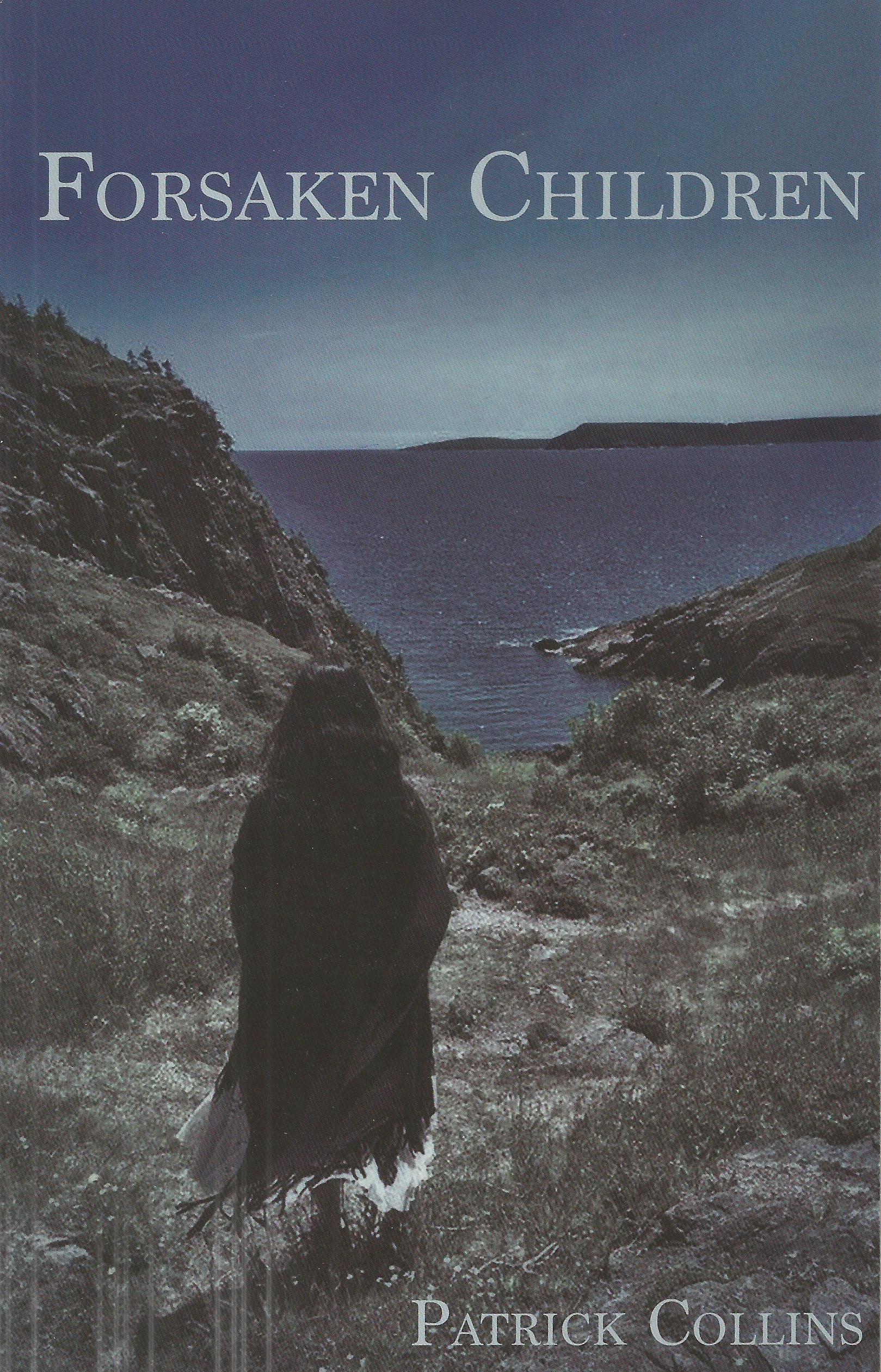
Forsaken Children0002Two stories of woe are being played out in different parts of the world.

First, in the community of Highlands, in Bay St. George on Newfoundland’s west coast, Catherine MacInnis has suffered a heartbreaking tragedy that brings her to the brink of despair. Indeed, her family wonders if she ever can or will escape.

At the same time, Scottish boys from Greenock are stowaways on a ship, the Arran. They are consumed with their own tales of suffering.

The lives of the woman and the boys are destined to connect in ways none of them can imagine.

This is the context for the story Patrick J. Collins, a native of Riverhead, Harbour Grace, explores in his latest book, Forsaken Children. It is a work of fiction, based on real life facts.

“I am a writer who needs to be motivated,” he admits. “In fact, my writing has to be driven, provoked by another story or event.”

Such stories cause him to “drill further down in order to understand the underlying motif. I am often incensed, maybe even disturbed, by what happens to real people, yet they survive.”

The almost unbelievable story Collins captures in his book has inspired the literary imagination of writers both far and near.

In 1937, George Blake included a chapter on the incident in his book, Down to the Sea: The Romance of the Clyde, its Ships and Shipbuilders.

In 1964, A. J. Stevenson wrote about “A Newfoundland Tragedy” in The Atlantic Advocate.

A year later, Edward Rowe Snow devoted a chapter to “The St. George’s Bay Horror” in his book, Astounding Tales of the Sea.

A decade later, local columnist Don Morris discussed “an episode of brutality at sea” for the readers of The Atlantic Advocate. In 1987, Morris retold the story of “a ship of pain and torment for young stowaways” in The Sunday Express.

And, in 1999, Isabel Anderson published an article, “Six Stowaways Cast Adrift On Ice” in Scottish Memories.

Patrick Collins’ approach to writing is to “generally read a great deal of history and almost always find something which turns my head. I learn as much as I can about the true story in old newspapers etc. and then imagine a tangential plot which would enhance the original story.”

Thus, he explains, “Catherine MacInnis from Highlands, Newfoundland, was the woman who spotted the survivors from Scotland, and successfully got the local fishermen to bring them to safety.

“Except for her role in saving the boys, the story of her life at Highlands is totally fictional.”

A functional fusion of fact and fiction.

Undoubtedly, Collins realizes that his book is not the final word on the horrific event that unfolded in St. George’s Bay in 1868.

John Brand, an Australian and great-grandson of one of the stowaways on the Arran, has been writing a book for several years. He has visited Newfoundland and gone to St. George’s Bay to see where his great-grandfather came ashore.

“I found Newfoundland to be a very pretty place,” Brand emailed me, “although no doubt extremely harsh in winter. A little different to the tropical climate I live in.”

Since 2006, I have been researching the St. George’s Bay Horror. I have in my possession copies of British shipping newspapers of the day, along with the crew agreements for the voyage of the Arran.

Collins is blessed to be a member of the Saltwater Writing Circle, from whom he receives “unceasing inspiration.”

The Circle is, he explains, “a group of writers who often get together, particularly in the winter months. We share our own stories which we have written for that evening and use the stories to grow our fellowship. Much discussion and friendship has evolved as a result.”

At the rate at which Collins writes books–Forsaken Children is his sixth since 2010–his fans can expect another one in the not-too-distant future. He is a veritable writing machine, whose fast-paced works of historical fiction justifiably line bookstore shelves.

Forsaken Children is published by DRC Publishing.

The Catholic and the Pentecostal

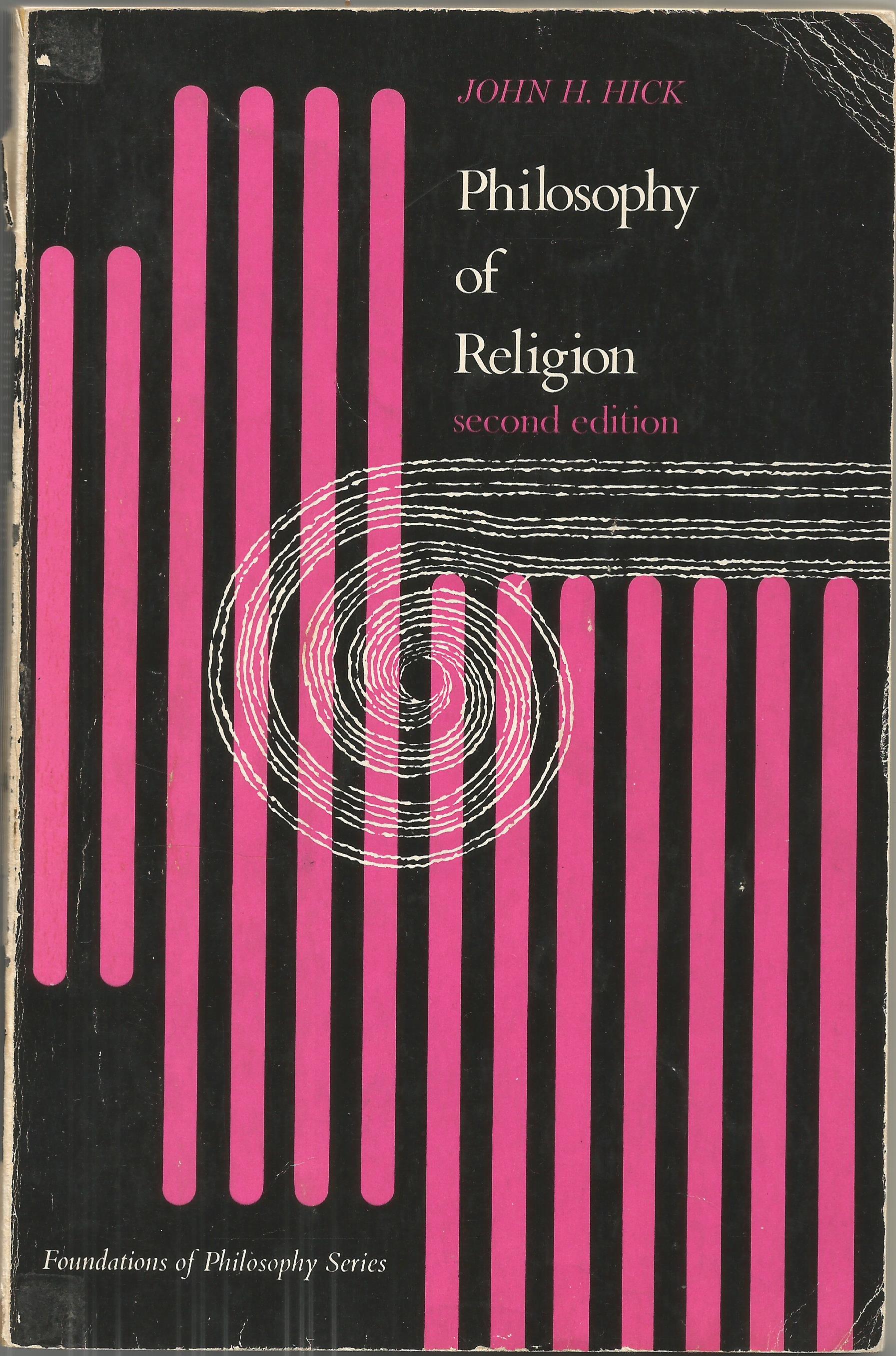
My battered copy of John Hick's book

My battered copy of John Hick’s book

Although I wasn’t required to earn a university degree as part of my ministerial training, I decided to attend Memorial University before entering Bible College.

At MUN, I sat under Father Edward Thomas Bromley. I recall his coal black hair, glasses and clothes, and the bass voice reflective of a deep mind. My intellectual life has never been the same since.

Not too long ago, St. Patrick’s Roman Catholic Parish in Carbonear celebrated a Golden Jubilee, commemorating a half century of priesthood for Msg. Bromley. (He has since retired.)

I suspect the Monsignor has a keen sense of humour. Because of this, I think he will enjoy this.

In the summer of 1976, I registered for Bromley’s Philosophy of Religion course. His office was in the so-called “temporary” buildings, where Queen Elizabeth II Library is now located.

A sign on the door identified the professor within: Fr. E.T. Bromley. Of course, we cynical students immediately noted what remained if you removed the full stops. Behind his back, we called him Fret Bromley!

On a more serious note, I will never forget his lectures, based on John H. Hick’s book, Philosophy of Religion.

Recently I pulled my battered copy of this book off my shelves to see what the Good Father was actually trying to instill within our captive minds. The text is liberally underscored, indicating I read it, even if I didn’t understand many of the concepts. More than once I scratched my head in consternation as I struggled to follow the author’s line of reasoning, wondering if a light would ever switch on.

Bromley began with an introduction to the subject.

Chapter 1 defines the Judaic-Christian concept of God. We impressionable students were guided through terms like atheism, agnosticism, scepticism, naturalism, deism, theism, polytheism, henotheism, pantheism, monotheism, and a few other “isms.”

Chapter 2 is the one which grabbed my attention, and which continues to challenge me even today: what are the grounds for belief in God?

Bromley highlighted the most important philosophical arguments offered to justify belief in the reality of God: the ontological argument, first cause and cosmological arguments, design (or teleological) argument, moral argument, and argument from special events and experiences.

However, chapter 3 provides cause for pause: grounds for disbelief in God. Having been raised in a pious Pentecostal pastor’s parsonage, I read with caution about the sociological and Freudian theories of religion and the challenge of modern science.

For me, the biggest objection to belief in God was–and remains–the problem of evil. Hick addresses the age-old question head-on.

“To many,” he writes, “the most powerful positive objection to belief in God is the fact of evil.” The dilemma is often couched in these terms: “if God is perfectly loving, he must wish to abolish evil; and if he is all-powerful, he must be able to abolish evil. But evil exists; therefore God cannot be both omnipotent and perfectly loving.”

Heady stuff for a 19-year-old boy from d’Bay.

Later, during my years of parish ministry, I often reflected on the intensity of evil around me. Whether it was the death of a child, the onslaught of cancer on an otherwise healthy body, or an earthquake on some part of the globe, it cannot be denied that evil, in all its various permutations, is part and parcel of what it is to live in an often feckless world.

Naturally, Bromley defended the Christian God, while never shying away from the big questions. He allowed for reflection, questions and objections, doing his level best to respond in an academic, yet spiritually sensitive, fashion. I know that much of what I believe today about God is directly attributable to what Bromley taught me in class. I am in his eternal debt.

So, as a Pentecostal, I am privileged to honour a Roman Catholic who, more than many other profs, changed the course of my life, stretching my mind, challenging me to academic excellence and to continually seek understanding for faith.

For those who are interested, I managed to scrape a “B” in Bromley’s course.

My Public Apology

Dear Robert:

I owe you an apology.

In my younger and more carefree days, I really enjoyed playing practical jokes on people. However, one such joke, unfortunately at your expense, got out of hand and, to put it mildly, created quite a furor.

It was the 1970s and you and I were students at a Bible college in Ontario. At the time, if you will recall, I thought you were obsessed with the Illuminati, a secret organization that is evidently seeking world domination. Some of our fellow students were becoming scared and unsettled, so I decided to play a joke on you, to convince you that the Illuminati was not a subject worthy of such intense focus.

I typed a letter that, in no uncertain terms, expressed concern that you were prying into the organization. I then issued a cease and desist order.

“Failure to comply with these directions,” I added, “will be met with severe repercussions. You have been warned!” As a fitting point of emphasis, I attached my fingerprint in red paint and signed off with a name traditionally associated with the organization. I mailed the letter to a penpal in England and asked him to send it back to you.

Some weeks later, one of our teachers arrived late for class.

“I apologize for being late,” he said. “I’ve just been speaking with Robert, who has received a threat on his life from the Illuminati. He needs your prayers.”

Not surprisingly, news of the letter spread like wildfire around the college. Rather than accept responsibility and apologize at that time, I remained silent.

I recall, with horror, the day you told me you had gone out and purchased a life insurance policy because of your fear of being hunted down and killed.

Robert, I’m currently reading the book, Public Apology, in which Dave Bry grapples with a lifetime of regret, one incident at a time. Bry is sorry about many things.

He’s sorry for offering fake drugs in the boys’ room in junior high. For stealing a six-pack out of the fridge in a couple’s garage. For rejoicing over the prospect that the town where his French teacher lives would be destroyed.

He’s also sorry for spitting a mouthful of hamburger back onto his place in front of other customers in a bistro in Paris. “I’m sorry if I caused a scene, or worse, cost you any business…. It had been a weird week. You want so badly to be cool when you’re 12…. I had a lot yet to learn about being cool.”

For shunning a friend after he got up in front of everyone and cried at the personal growth workshop their parents had sent them to when they were in high school. “We made fun of you, as I’m sure you were aware,” Bry writes.

Bry claims to be a different man now. He desperately wants to come to terms with his past by making right a lifetime of wrongs before moving on. He’s doing this by publicly apologizing.

Robert, I would like to think that I too am a different and, hopefully, better person than I was in the 1970s. I realize now that, at the time I was cooking up this joke, I should have been doing more of what I had gone to college to do in the first place, prepare for the pastoral ministry. I should have spent more time studying the Bible and less time playing jokes on people. I should have devoted more time to prayer, in an attempt to discern the shape of my future. I should have paid more attention in chapel to spiritual things than to ways to scare the livin’ daylights out of you. I should have listened more closely to my teachers at the college and the pastors at the church I attended on Sundays.

Because hindsight is perfect sight, I cannot undo the past. But I can come clean by offering you a public, sincere and heartfelt apology for my insensitive act. Will you please forgive me?

Meanwhile, if you want to read Dave Bry’s book, Public Apology, it is published by Grand Central Publishing of New York.

In the words of Rosie Schaap, a columnist with New York Times Magazine, the author “shows us that compassion and maturity start with contrition. If you’ve ever behaved badly at a family gathering…, maybe it’s time to say you’re sorry. With abundant humour, humanity, and voice all his own, Bry shows the way.” I know he has shown me the way.

Burton Janes