Please allow me to ask some deep and probing questions.
How many angels can stand or, for that matter, dance, on the head of a pin? Can God create a boulder too big for him to lift? Is he able to create two adjacent mountains, with no valley in between? Can he grab a baldheaded man by the hair of his head? (Please, no jokes about the follicly-challenged!)
There may be those who think I have too much spare time on my hands. Perhaps so. Still, I cannot help wondering about certain things. Oxymorons often grab my attention, creating a moment of levity and bringing a smile to my face.
For those unfamiliar with this term, an oxymoron is a figure of speech by which a locution produces an incongruous, seemingly self-contradictory effect. I will illustrate.
There are many brief examples of oxymorons, such as a fine mess, awfully good, baby grand piano, bright shade, calculated risk, conservative liberal, cruel kindness, dark star, dull roar, educated guess, eyes wide shut, fail safe, friendly enemy, genuine imitation, gunboat diplomacy, half empty, honest crook, ill health, inside out, joyful trouble, junior senator, and make haste slowly.
Of late, I’ve been enjoying other, more involved, oxymorons. I beg the reader’s indulgence as I list some of them.
- Is it good if a vacuum cleaner “really sucks”?
- Why is the third hand on a watch called the second hand?
- If a word is misspelled in a dictionary, how would we ever know?
- If Webster wrote the first dictionary, where did he find the words?
- Why do we say something is “out of whack”? What is a “whack”?
- Why do “slow down” and “slow up” mean the same thing?
- Why do “fat chance” and “slim chance” mean the same thing?
- Why do tugboats push their barges?
- Why do we sing “Take Me Out to the Ballgame” when we’re already there?
- Why are they called “stands” when they’re made for sitting?
- Why is it called “after dark” when it really is “after light”?
- Doesn’t expecting the unexpected make the unexpected expected?
- Why are a “wise man” and a “wise guy” opposites?
- Why do “overlook” and “oversee” mean opposite things?
- Why is “phonics” not spelled the way it sounds?
- If work is so terrific, why do they have to pay us to do it?
- If all the world’s a stage, where’s the audience sitting?
- If love is blind, why is lingerie so popular?
- Why is “bra” singular and “panties” plural?
- Why do you press harder on the buttons of a remote control when you know the batteries are dead?
- Why do we put suits in garment bags and garments in a suitcase?
- How come “abbreviated” is such a long word?
- Why do we wash bath towels? Aren’t we clean when we use them?
- Why doesn’t glue stick to the inside of the bottle?
- Why do they call it a TV “set” when you only have one?
- Christmas – what other time of the year do we sit in front of a dead tree and eat candy out of our socks?
- Why do we drive on a parkway and park on a driveway?
Intriguing questions all.
Oxymorons are especially useful to writers, in order to direct the reader’s attention to an apparent contradiction. At times, oxymorons, the more unusual the better, make effective literary tools. In other words, the idea being relayed by the writer is more vividly described when such a figure of speech is used. In addition, oxymorons can add depth, interest and creativity to a piece, resulting in a rhetorical effect by paradoxical means.
So what’s up with a grammar lesson on oxymorons?
Both life and language are serious business. Many people react to oxymorons by shrugging them off as humourous or inconsequential. In a world in which bad news is the order of the day, perhaps there are times when we should take a breather from the demands of life, sit back, and reflect on something as simple as the pleasurable aspects of language.
We all need lighthearted moments, to counterbalance the more solemn realities we face daily. If we can draw a moment of levity from figures of speech such as oxymorons, then so much the better.
Carpe diem. Enjoy the present.
An awfully good idea, don’t you think?
 as her doctorate, from Memorial University of Newfoundland, is in NL history.
 His autobiography, Rumours of Glory (2014), is not “your standard rock-and-roll memoir,” he says, which means it’s less about partying and more about physical and spiritual journeys and political activism.
 The most recent edition of Adrift on an Ice Pan appeared earlier this year from Flanker Press, in St. John’s.
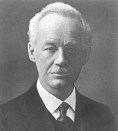 account of the rescue, recited in the Newfoundland vernacular, by a member of the rescuing party. The book ends with a biographical sketch of Grenfell, written by Clarence John Blake.
 In her unpublished autobiography, Rays of His Splendor, Demarest wrote: “The response [to the St. John’s meetings] became an avalanche. Sometimes people could not wait to get to the seekers’ room; they fell on their knees right in the aisles.” Estimates of converts range from “many hundreds” to 2,000. A newspaper reported 684 Methodists, 126 representing other denominations, and 190 giving no church affiliation. The Demarest crusade helped consolidate evangelicalism in St. John’s.
 book of “line drawings ideal for colouring.”

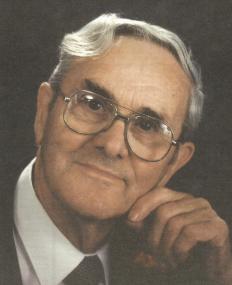 WINSOR, ARTHUR S. (1905-2005). Clergyman. Born Triton. Married Phoebe Palmer Bishop of Bay Roberts. At 18 years of age, Winsor moved to Corner Brook. Raised in The Salvation Army, in 1926 he experienced religious conversion at “The Ark,” the Pentecostal meeting-house founded by Charles L. March (1869-1932) and Herbert Eddy (1883-1959) at Humbermouth. Soon after, Winsor became a pastor with the Pentecostal Assemblies of Newfoundland. Largely through the efforts of Winsor, William Gillett (1906-77) and Thomas P. Mitchell (1900-80), churches were established in several western and central Newfoundland communities. From 1963 to 1982, Winsor was the first Chaplain for Institutions for the denomination. He wrote about his early life in a series, “Things…Seen and Heard,” published in Good Tidings, the official publication of the denomination.
 I must admit that when I watch Don Cherry on Coach’s Corner, I don’t immediately think of his spiritual side. But perhaps I’ve been overlooking a little-known aspect of his life.
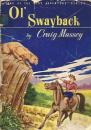 As I flip through Ol’ Swayback, I see this notation in my childish handwriting: “Burton Janes. I got it from Karen Janes. She sold it to me.” I asked sister Karen about this. “I guess I needed the money!” she quipped.
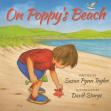 Newfoundlander Susan Pynn Taylor appears to be a popular writer. I have two of her works, both illustrated by David Sturge of St. John’s, On Poppy’s Beach (2013) and At Nanny’s House (2015).
 one; Elizabeth Pratt (later Pratt-Wheeler) illustrated the other two.
 Nancy Keating wrote and helped to illustrate Yaffle’s Journey (2013), the other illustrator being her daughter Laurel.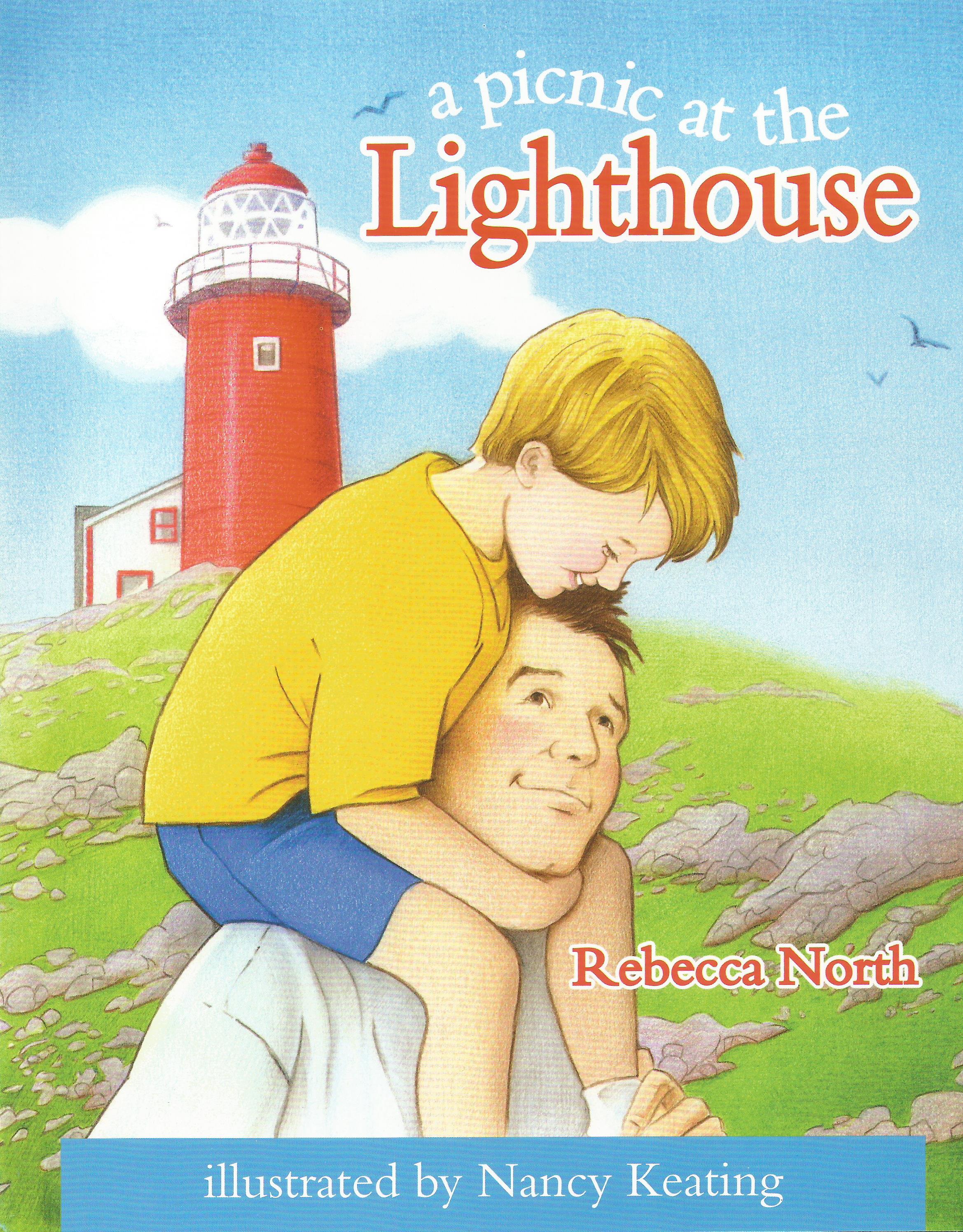
 George Murray, who lives in St. John’s, has written his first work for children, Wow Wow and Haw Haw (2014), illustrated by Corner Brook native Michael Pittman and published by Breakwater.
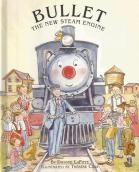 Dwayne LaFitte, who currently resides in Mount Pearl, is the author of Bullet the New Steam Engine (2016). Illustrated by Therese Cilia, who currently lives in Belleville, ON, it is published by Pennywell Books.
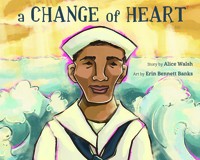 native with Canadian roots, to produce A Change of Heart (2016), which is published by Nimbus of Nova Scotia.
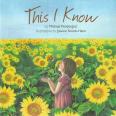 Finally, This I Know (2015) is Michael Pendergast’s contribution to children’s literature. His book is illustrated by Joanne Snook-Hann. It is published by Acorn Press of Prince Edward Island.
 Burton K Janes