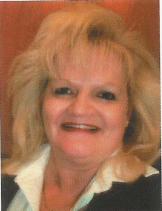
 Sandra Mae Brown is a survivor of child abuse.
Born in Botwood, NL, she now resides with her partner in St. Catharines, ON. She has three children and eight grandchildren. She loves spending time with her family, and likes going on road trips and making happy memories.
This, despite the fact that many of the memories of her early life are anything but happy. As a child, she was beaten, starved and left to die by her parents.
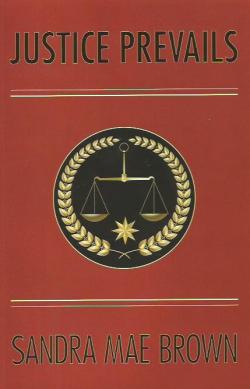
She has now told the story of the horrendous abuse she endured, including how she bravely stood alone and took her parents to court. The title of her book is Justice Prevails.
“My hope,” she says, “is that, by sharing my experiences, I can prevent similar things from happening to other children, so that they won’t have to go through what I had to endure.”
Writing her story has been, she says, “a long and arduous journey,” consuming 15 years of her life.
Leaving school with only a grade three education, she learned, with the help of her friends, children, grandchildren, coworkers and neighbours, “to read and write enough to see my dream of sharing my story become a reality.” She has achieved her goal of sending “a message to the world” and drawing “public attention and action to the issue of child abuse.”
I personally do not believe that forgiveness means forgetting. I asked Sandra Mae this very question.
“Forgiving is not forgetting about the things that were done to me,” she responds. Instead, “I think it’s more about letting go in order to move forward with my life.”
Sharing her story, as difficult as it was, has been, she states, “the key to my freedom.”
In a transparency born of pain, she admits, “I’ve tried drugs, drinking and meds from doctors. I’ve been in the hospital for six weeks at a time.”
However, nothing worked for her until she, in her words, “started writing and, believe me, that wasn’t easy, but I’m glad I did because today I’m so happy with all that I’ve accomplished…. I’m very much at peace with my life now.”
As an abused child, she often prayed, asking God to deliver her.
“Let me take you back to that dark room,” she says, referring to the “dark hole in the wall,” where her parents had moved her when she only six. “It’s so cold inside, my fingertips are sore and bleeding as I try hard to break free. The smell of my own body waste makes me sick. I hear voices outside, but nobody seems to hear me crying for help. Mother’s footsteps scare me. I’m afraid because, at any moment, she’s going to pull me out, only to beat me again. It’s so dark, I can’t even see my hands in front of my face.
“I pray to God for help, but help doesn’t come. I say to myself, ‘Maybe God didn’t hear me praying.’
“But now,” she continues, “I believe God was there beside me all the way. I truly believe one must talk through the valley in order to claim the victory in the end. I also believe life’s hardships can be our best teacher.”
 Sandra Mae’s message resonates with her readers.
“I’ve gotten messages from across Canada from people telling me how touched they were by reading my book.
“One mother said she had to stop reading and call her daughter, whom she hadn’t talked to in years, to say she was sorry and to tell her how much she loved her and wanted to see her again.
“One young lady wanted to send a copy of my book to her mother in hopes of making things right between them again. Today they’re like best friends. Her father sent me a note of thanks.
“I feel so blessed to have all the support from people I don’t even know.”
She hopes her book will “go far and wide around the world,” but not for the sake of selling more copies. Rather, she hopes it will “save other children who are suffering from child abuse.”
She has a practical word of advice for her readers who may have gone through abuse in their own lives: “Don’t let the abuse define who you are.”
Meanwhile, she believes it is “very important for people to open their eyes to child abuse. A home may look pretty on the outside, but that doesn’t mean it’s clean on the inside.”
Sandra Mae Brown self-published her book, Justice Prevails, which is printed by Friesen Press of Victoria, BC.
 An old Scottish proverb says, “Open confession is good for the soul.” Well, I have a confession of sorts to make. First, though, some background information is in order.
 So, after Flanker Press of St. John’s sent me a review copy of two of Victoria Barbour’s novels, Against Her Rules and Hard as Ice, I made it a point to start reading them.
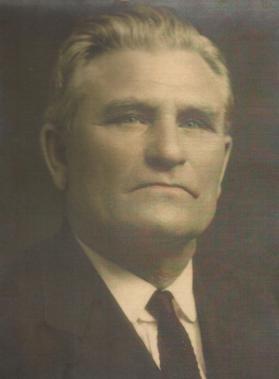 Today, the name of Fred T. Fuge is virtually unrecognized in his native Newfoundland, and only marginally better known in his adopted land, the United States of America, where he spent the greater part of his life, leaving his mark as a clergyman, author and poet. As a result of the recent discovery of a cache of his writings, both published and unpublished, the broad contours of his life can be reconstructed. A prominent feature of his poetry is his love of the land of his birth. His life reflects the truth of the timeworn adage, “You can take the boy out of the bay, but you can’t take the bay out of the boy.”
 I did Kindergarten in Central School in Twillingate in 1962-63. My teacher and principal were Doreen E. Burton and Gordon R. Martin respectively. By then, the Royal Readers had long since disappeared from the education system. My late parents, who had used them as part of their schooling, told me and my siblings about the books. I often wondered if I would ever possess my own personal copy of at least one of them.
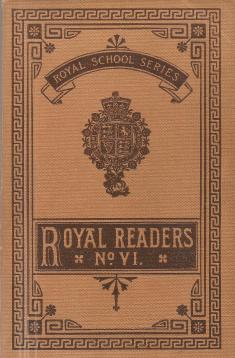 The sixth book–which I now have the good fortune to own–contains word lessons and passages with sections on great inventions, classification of animals, useful knowledge, punctuation and physical geography, as well as the British Constitution.
 Last summer, when I worked as museum director with the Town of Clarke’s Beach, someone gave me this photo, which was identified as the Clarke’s Beach railway station. I was ready to publish it as such on the town’s Facebook page, when I was informed that this is the depiction of a railway station in another town. Which one? I didn’t know.
 In a former life, a singular delight of parish work in one of the province’s larger rural areas was the local ministerial association. Clergy of several denominations shared great camaraderie and regularly came together for both spiritual and social events. It was refreshing to me personally to see the ecumenical spirit at work in a local setting, having grown up in a Protestant denomination that frowned on inter-church relations.
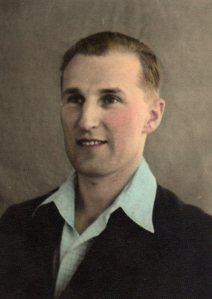 By 1931, Herbert Mercer Butt (1907-2005) of Harbour Grace was a dentist in Poona (an anglicized form of Pune), India. The road he had traveled to get there was no less interesting than the variety of clients in his dental practice in the country.
 Perhaps best known among Dr. Butt Sahib’s clients was one Mohandas Karamchand Gandhi (1869-1948), the pre-eminent political and spiritual leader of India during the Indian independence movement. Ron Pumphrey refers to Gandhi as “the then upstart and now Indian hero.”
 I recently read the book, The Ocean at My Door. During his lifetime, the author, Ron Pollett (1900-55), was voted by the readers of the now-defunct Atlantic Guardian as “Newfoundland’s favourite storyteller.” And with good reason.
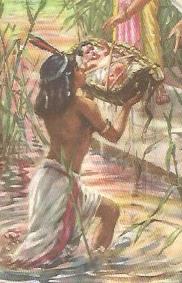 The one illustration that kept me in the Old Testament was “The Infant Moses Saved From the Nile.” The only male in the illustration was Baby Moses. The rest of the people were Egyptian females, one of whom was only partially clad and exiting the pool carrying Moses in his basket. I was in love with this young lass! I don’t suppose she lives here in Port aux Basques! I thought to myself sorrowfully.
 I do solemnly vow and declare that things are never funnier than in church. And not without good reason. Attendees are usually encouraged, either overtly or tacitly, to stifle levity and maintain a degree of decorum, a modicum of reverence befitting the House of God.
 Burton K Janes