Sleepwalking in St. John’s

sleepwalking_0“So, Burton,” a friend said, “you believe God can do anything, right?”

“I do.”

“Well, I know something he can’t do.”

“What’s that?”

“He can’t grab a baldheaded man by the hair of his head!”

How do you argue with such “logic”? I’m convinced my friend was making a none-too-subtle dig at my baldpate, while he sported a head of bushy hair.

During my heady days at university in the early 1970s, I minored in Philosophy, or the love of wisdom. Questions that facilely made the rounds of our classroom included: How many angels can dance on the pin of a needle? Can God create two adjacent hills with no valley in between? If a tree falls in a forest and there’s nobody present, does it make a sound? Can God create a rock too big for him to move?

We were told that such questions are illogical, and that if we accept the existence of God, then he is Logic Personified.

I no longer dwell on such imponderables. However, I still have an insatiable desire for knowledge. Some of my questions today are along the lines of, to cite the title of a book in my personal library, Why Can’t You Tickle Yourself? And Other Bodily Curiosities. I’m mesmerized by questions pertaining to backaches, blinking, frowning, “funny bone,” headaches, itching, sneezing, snoring, stomach rumbling, wrinkling, yawning… Why do we do certain things?

Specifically, I wonder about sleepwalking. I have an intellectual curiosity, but also a vested interest. I need to know why one walks in one’s sleep.

Following our marriage, I decided against telling Sherry that I was given to sleepwalking. I shared with her many of my idiosyncracies, but I thought it best for her to learn about this one all on her own. Plus, most of my sleepwalking experiences to date had been fairly innocuous. If and when I did take a trek in my sleep, it was for a brief stint, after which I awoke and returned to the marriage bed.

I now know, according to the aforementioned book, that “the sleeper has not passed smoothly out of the deep, slow-wave stage of sleep.” Many sleepwalkers do nothing more than sit up in bed and stare glassily into space for a few seconds. Others may walk around for up to half an hour.

At the time, we lived in a three-storey townhouse in St. John’s, not far from the Avalon Mall. One day I pieced together what had happened the night before.

Our bedroom was on the top floor. I got out of bed and, in the dark, walked across the room, turned the doorhandle, maneuvered the landing, and went downstairs. The front door leading outside was directly ahead of me. If I took a right turn, I would be in the hallway, leading to the kitchen, livingroom, and basement door. Whether or not I stood at the bottom of the stairs and deliberated about which direction to take, I will never know. However, I do know what I did next.

Leaving the last step, I walked the half dozen feet to the front door. I reached out and grasped the doorknob. The sudden stab of cold must have been the awakening factor, because when I roused from my stupour, I was standing in my briefs, gripping the handle.

It took a few moments before the realization of where I was and what I had done set in. Then, smiling benignly, I wended my way back upstairs and rejoined my wife, who was lying in state, sleeping peacefully.

The next day, I regaled Sherry with my sleepwalking adventure. The practical one in our relationship, she proceeded to put forward a rather unsettling scenario. A smile spread across her face.

“What’s so funny?” I asked.

“I can see the newspaper article now, along with your picture. The caption would probably read, ‘Local Minister Sleepwalking in Briefs Near Avalon Mall!’ “

Why I Bought 120 Pens

BiC0002The look on the cashier’s face said it all. She didn’t say it in so many words, of course, but I could imagine what she was thinking, You want 10 boxes of pens? There are 12 in a box, so that makes 120 pens. At $5.69 per box, that comes to a total of $56.90, or about 47 cents a pen. Hmmm.

“I’m a writer,” I said, “and those are the only pens I use.”

I paid the bill and left the office supply store, feeling her eyes boring into my back.

To me, BiC Classic Stic ball pens are a writer’s best friend.

I recently read the book, How I Write: The Secret Lives of Authors. The editors, Dan Crowe and Philip Oltermann, asked several authors a single question, “Can you think for a minute about which object, picture or document in your study reveals most about the relationship between living and writing, and then send it to us?” The responses are revealing.

Will Self plasters his wall with Post-it Notes, which he organizes into scrapbooks, then turns into books.

Douglas Coupland devours Baker’s milk chocolate chips while waiting for his endorphins to kick in. “Without these chips, there is no work…. I keep them to the left of my keyboard and I eat maybe 50 or so medicinally once a day.”

Siri Hustvedt keeps on her desk a metal ring with seven keys of various sizes, on which her late father had written, “Unknown Keys.” Hustvedt explains, “These keys to phantom doors, suitcases, safes and diaries are linked in my mind to making stories.”

Nicholson Baker uses earplugs. “Some years ago,” he writes, “I bought an industrial dispenser pack of 200 pairs of Mack’s earplugs…. I can sit anywhere, in any loud place, and work. Everything becomes 20 feet farther away than it really is. The chirping, barking, jingling cash-drawer of a world is out of reach, and therefore more precious.” At least I bought only 120 pens!

Peter Hobbs believers that if he carries around with him red and blue notebooks, “everything in them would turn out fine, ease of writing attaching to the tools I was using, and the pages would easily fill with ideas for short stories and novels, drafts of paragraphs and scraps of overheard conversations, stray lines of poems, words I’d discovered, quotes I liked, diary fragments.”

John Byrne uses portable typewriters, currently on his twenty-seventh or twenty-eighth. “God bless the man who made it!”

Nat Segnit builds a barricade around his computer. “The barricade,” he explains, “is built of books that have had some influence on my writing…. It’s a defense against having nothing to say, I guess, my book-barricade, but as it goes with defense, it works best when it goads me to get on with it.”

Hanif Kureishi, who prefers to write by hand rather than type, keeps a supply of pens in his room.

Elif Shafak buys only purple pens, explaining, “Being unable to accumulate bits and pieces, even the most beloved ones, in time I projected all my passion for inanimate objects onto one single article: a purple pen. Every novel that I wrote so far, I started writing with a purple pen. Although I am a devout user of computers and laptops, all my notes I take with a purple pen. I must have lost so many of them, bought so many new ones, found some old lost ones hither and thither.”

I follow in their footsteps.

My BiC Classic Stic accompanies me virtually everywhere. It’s the last object I insert in my shirt pocket before leaving for work each morning. I, like Elif Shafak, am devoted to my computer. However, I use my fine-point ball pen to make diary entries, take notes while reading, and write while waiting to see my doctor or in the car while my wife shops.

Meanwhile, I’m man enough to admit I may have an obsessive personality. However, I take comfort when I read Hanif Kureishi’s observation, “Don’t think I haven’t noticed that many artists are as compelled by the rituals which surround their art … as much as by the matter itself. After a few years it becomes obvious that the art is there to serve the ritual, which is everything. If you aren’t an obsessive, you can’t be an artist, however imaginative you might be.”

Without my fine-point ball pen, I feel naked as a writer … and that’s not a pretty sight.

A Prayer for the New Year

Hudson

Rev. Alan Hudson

On December 10, 1866, the wife of Alan Hudson Sr. of Pouch Cove, NL, gave birth to a child. The woman’s name is unknown at this late remove, but the boy was his father’s namesake and a brother for Julia.

Years later, the boy’s biographer wrote, “When but a week old, he was taken so critically ill that the old family doctor said the baby could not live.

“But the feeble father said, ‘Yes, he will live and will become a minister of righteousness.’ Then, taking the helpless infant in his arms, he blessed him, and, lifting a prayer to Almighty God, dedicated the child to the church.”

Eight weeks later, the senior man, who had been the owner of a general store, a successful ship captain, a teacher of navigation, and a faithful member of his church, passed peacefully away.

His young son would indeed live, leaving his own distinctive mark as a poet, novelist, dramatist and clergyman.

As an adult, Alan Jr. recalled one childhood experience in particular.

“One of the most wonderful experiences of my childhood was a sledge ride across Cape St. Francis to St. John’s,” he said, “behind eight magnificent, great Newfoundland dogs.

“Long before day came the hasty breakfast by candlelight, the careful packing of grocery boxes and bundles on the sledge, a basket of lunch for ourselves, a basket of corncake and scraps for our steeds.

“Last but not least, the stowing in of my dumpy little figure, tucked to the chin in warm wolf robes beside the driver, then a swish and a snap of his long, lashed whip; a wild leap, a chorus of glad barks from those splendid dogs, and away we flew, under the morning starlight, into trackless fields of snow, or seemingly so to my wondering young eyes.

“The music of the bells on the dogs, their joyous cries as they strained their wiry muscles to their task, their curly, glistening, black and white coats, their long, silky ears and plumy tails swept backward in the morning wind, thrilled my childish imagination with that sense of motion and wild adventure.

“The vast expanse of white, untrodden snow-fields, the deep blue sky arching over us, lit by a thousand glistening lamps, our onward dash toward the sparkling horizon, all come back to me like some glorious flight toward the stars!”

When, in the spring of 1896, Rev. Alan Hudson Jr. received a call to the First Congregational Church, in Brockton, Massachusetts, he said to his wife, Ella, “God help me to fill my dying father’s prophecy.”

On January 1, 1905, Hudson composed a prayer for the New Year. It is a prayer that can be prayed by both the religious and irreligious. Though written by a Protestant minister, it contains no reference to God per se.

The author of the prose poem, Desiderata, encourages readers to “be at peace with God, whatever you conceive (God) to be.” So perhaps, regardless of our religious or irreligious predilection, we can pray this practical prayer as we stand on the cusp of a brand new year.

“Help me to face the future bravely; not with regret for wrongs I cannot righten, but with resolve for new and nobler doing.

“Help me to love my brother man whate’er his colour, creed or race. Teach me to know that love is greater than creed, that noble deeds outlive the accident of birth.

“Help me to be kind to the poor, loyal to my friends, and fair to my enemies; slow to believe wrong of another, and quick to believe the right; not prone to suspicion, weakness or littleness of soul, but charitable in judgment to rich and poor alike.

“Give me courage to see the wrong in myself, and forgive it in others; to do good without thought of praise or reward; to give the word of hope to those who sorrow, and the shoulder of strength to those who carry burdens.

“Help me to go with cheer to my daily task and do it well, and when it’s done to live in joy with those I love at home. Give me the gift of health that I may work and rest, and on the morrow face my duties bravely like a man. Amen.”

In 1912, Hudson would write a well-received novel, A Heritage of Honour. Interestingly, he dedicated it to two women in his life, “my mother, a gentle lady of the old school, (and) my wife, a sweet lady of the new, in whose tender eyes of brown and blue I see as in a mirror a familiar face.”

An Old Time Christmas

Christopher bookTom Christopher, who lives in Butlerville, NL, is a lyricist. He collaborates with Heather Reilly, an illustrator who lives in Dildo, NL. Together they have produced a book, An Old Time Christmas, for which Tom wrote the lyrics, and Heather provided the illustrations.

Tom has been writing poetry and song lyrics for a decade. He began by writing poetry for his own enjoyment. Then, it was discovered and enjoyed by others.

He writes about real-life experiences because, he says, he wants to “touch base with the common person.” His lyrics revolve around such perennial topics as the fishery, military, family and relationships. He even addresses social issues, like drinking and driving.

A few years ago, Tom wrote a set of lyrics with a decidedly Christmas theme, “Santa Almost Missed Our Town.” His first book, with this song as its namesake, was originally one of the songs from a Christmas album by a local music group, DaNdA.

Tom’s latest book, An Old Time Christmas, was written as a poem after a taping for a Christmas special.

A father tells his son what he discovered one special night in Newfoundland back in the 1960s, when he stayed awake on Christmas Eve to learn the truth about Santa Claus.

The book is superbly illustrated by Heather Reilly, an author with a background as a music teacher.

The connection between the lyricist and the illustrator is, Tom explains, “a very happy coincidence.” Tom and his fiancee, Darlene Butler, first saw Heather at a craft fair and noticed her books. An enthusiastic, energetic and creative person, she has added immeasurably to the final product.

The cadence of Tom’s poem, along with Heather’s brilliant and colourful images of the holiday season and memories past, makes for a winning combination.

Tom is forever dreaming up ideas for new lyrics.

He says that those ideas “come from everywhere and everything. I could hear somebody say something, see a road sign. If one or two words stay with me, I will build around it. It’s similar to putting together a jigsaw puzzle; the only difference is you are using words. They all have to go in a certain place and fit together right.”

Tom firmly believes that children help to keep the magic of Christmas alive. His latest book is dedicated to “the child inside us all. As we grow older, memories of Christmas time when we were children become nearer and dearer to us. Christmas keeps the children in us all alive.”

An Unforgettable Rescue

Everett Moore and Beulah Morgan

Everett Moore and Beulah Morgan

A 95-year-old man sits on his sofa, looking at the woman to his left. His eyes well up and his bottom lip quivers.

“I’m not the hero in this story,” he says, his voice cracking.

He’s reliving a vivid memory from his past, one that happened more than six decades ago.

The woman, too, is deep in thought. Her face registers joy.

“But you are a hero, Mr. Moore,” she insists, turning to face him. “You saved my mother, Elsie Porter, from drowning.”

The silence is deafening, but for the sniffles.

Today, Everett Moore of Clarke’s Beach and Beulah Morgan of Conception Bay South share a special bond that will link them forever–a fateful day in February 1952, when Everett came to the rescue of Beulah’s mother.

Three Pentecostal preachers’ kids–Lewis, age six, David, four, and Beulah Pelley–were playing on Clarke’s Beach Pond.

Inside the house, Doris Pelley, the pastor’s wife; her sister, Elsie Porter; and their mother, Elizabeth Kennedy, were chatting.

Suddenly, the door burst open and in rushed one of the boys.

“Mom,” he shouted breathlessly to Doris, “Beulah’s gone down through the ice.” Beulah Pelley was almost two.

The three women ran outside. Without a thought about her personal safety, Elsie dashed the 20 feet across the ice and jumped into the frigid water.

Gathering her niece, Beulah, into her arms, Elsie threw her to Doris and their mother. One of them caught the young girl and carried her into the parsonage.

But Elsie Porter herself was now in trouble. She was unable to climb to safety and getting weaker from the cold water.

Not far away, Everett Moore owned one of the few telephones in town. His wife, Laura, got a desperate call from Doris Pelley, asking for help because Elsie Porter was in the water.

Laura shouted to her husband, the proprietor of Moore’s Grocery Store, across the road.

“I just went,” Everett says matter-of-factly. “There was no way Mrs. Porter could get out of the water.”

Adrenaline propelled him forward. He knew the ice was too weak to bear his weight. Grabbing a 15-foot ladder, he pushed it out on the ice ahead of him and gingerly walked toward the woman in distress.

Elsie was up to her neck in five feet of water, but her feet were on the bottom. She flailed her arms helplessly.

“I broke the ice with a stick,” Everett says. He then walked Elsie to shore.

Everett Moore is unassuming about his involvement in the near tragedy, convinced he only did what anybody would have done.

“The real heroine in this story is Elsie Porter,” he says modestly. “She was the one who got the little girl in. All I did was make a pathway for her to walk to shore. I was the right man at the right time.”

Another cascade of tears.

“Tears are in my eyes today because I’m a very emotional person,” he says.

Beulah Morgan, Elsie Porter’s daughter, dries her eyes and gazes at Everett.

“I could’ve lost Mom when I was 11 if Mr. Moore hadn’t been there,” she says.

Beulah Pelley, the little girl in the water, is now a grown woman. Doris Pelley died in 1982. Elsie Porter died in 2001 at age 88.

For years, Beulah Morgan had longed to meet the man who saved her mother’s life. In 2004, her dream became a reality, when she came face-to-face with Everett Moore. A dramatic conversation ensued.

“Mr. Moore,” Beulah said, “do you remember Pastor Ray and Doris Pelley, who lived in Clarke’s Beach some years ago?”

“Yes, ma’am,” he answered. “They had a little girl who fell through the ice.”

“Yes, I know the story,” Beulah said. “The lady in the water was my mother, Elsie Porter. And you rescued her.”

Mormon Missionaries on the Move

Opening your front door, you’re met by two clean-cut young men. They stand out from the crowd, if for no other reason because of the conservative way they’re dressed.

They wear dark trousers and suit coats, and white dress shirts. Both sport ties, one with red stripes, the other a blue print. A name tag on their lapel gives their surname, with the appropriate title and the name of the church they represent. They grip the Book of Mormon in their hands.

“Hi,” the younger one says pleasantly. “I’m Elder Walz, and this is Elder Morin. We’re missionaries with the Church of Jesus Christ of Latter-day Saints. Today we’re sharing a message about the Book of Mormon.”

Depending on the householder’s reaction, the missionaries either continue with their message or politely turn and walk away. Either way, their part’s done.

Meet Daniel Walz, 19, who is from Provo, Utah, and Alexandre Morin, 21, whose hometown is Saint-Hilaire, Quebec. These two LDS Church missionaries have been living in Bay Roberts for the past several months, following a brief period of training in Provo.

During a recent interview, they spoke openly about their mission.

“As representatives of Jesus Christ, we volunteered two years of our lives to come out and preach to people, to invite them to come to Christ and receive his gospel,” Walz explains.

The LDS Church makes missionary work top priority. At least 50,000 missionaries currently serve worldwide. Most of them are single men and women in their late teens and early 20s. Each one volunteers for a two-year mission on a full-time basis, and is assigned a place, usually far from home.

They travel in groups of two, “as Christ himself told the apostles in the Early Church,” Morin says.

He adds: “It’s a really important step in my life. There’s great blessing that comes from it, and it will help me to grow and learn.”
Men between 19 and 25, who meet standards of worthiness, are strongly encouraged by church leadership to consider a mission.
On the other hand, they have no say whatsoever about where they end up. By signing on the dotted line, they indicate their desire to go on a mission. The church then sends them “wherever they feel we would be needed,” Morin explains. Raised in the LDS Church, both young men are unquestionably committed to the task. “I’ll go wherever I’m told to go,” Walz states firmly.

Bay Roberts is Walz’s first posting, while Morin has already served in New Brunswick and Nova Scotia. They spend four to six months in a community. A day or two before they are to move on, they get a call from a church leader.

LDS Church missionaries receive no salary, but they or their families usually provide financial support.

“We work and save up beforehand enough money to support us for the two years,” Walz says. They pass over their earnings to the church who, in turn, dispenses it to them over the duration of the mission.

“Yes, it is a sacrifice,” Morin admits. “I left school, family and friends. You never know what’s going to happen before you go back home. But I find that what we learn in those two years is well worth that sacrifice. Still, there are those days when I miss Mom.”

Walz agrees. Though he misses his family, he knows “God is with us. It’s definitely worth leaving my family and friends and school.”

As for their conservative dress, Morin admits, “Yes, we’re obligated to dress this way.” He explains it this way: “If somebody comes to your door dressed in rags and a dirty T-shirt, the first message that comes to your mind is, ‘Who’s that clown?’ It’s not the best way to represent our Saviour.”

At the conclusion of their mission, Morin hopes to train as a high school teacher and Walz plans to go back to university.
Until then, they have little spare time.

“Most of the time, we go door-to-door, seeking people who want to listen or who are interested in learning more about our message about Christ,” Morin says.

Offering service
A sacred text of the LDS Church is the Book of Mormon, commonly dubbed “another testament of Jesus Christ.” The flyleaf describes it as “an account written by the hand of Mormon upon plates taken from the plates of Nephi,” transcribed by Joseph Smith Jr. “It is a record of God’s dealings with the ancient inhabitants of the Americas.”

A second sacred text is the Bible.

“We believe both books to be of equal value,” Walz says. “They are both the Word of God. But the Book of Mormon is something we want people to know about because most people don’t. We sometimes seem to put a bigger emphasis on the Book of Mormon because that’s the thing that makes a difference.”

Walz and Morin offer their service to residents in very practical ways, whether it be shovelling snow or digging ditches. “We try to involve ourselves in whatever opportunities show up, to help whoever’s in need in the community,” Morin says.

Their other activities revolve around Sunday.

At 10 a.m., the faithful gather in the church, located on Central Street in Bay Roberts and where all are welcome. The first hour is a public meeting. In the second hour, children, men and women divide into study groups.

About 19 people – five women, eight men and six children – attended the meeting on Oct. 24. It was presided over by President Gary Young.
Everyone is known as either “Brother” or “Sister.”

Prayers are complemented by congregational singing, accompanied by a piano. No offering plate is passed. The saints believe in the “law of tithing,” with members willingly giving 10 per cent of their earnings to their church.

A meeting highlight is the blessing and passing of the sacrament by the priesthood. Participants eat bread and drink water, the latter in individual cups, as a way of remembering the body and blood of Jesus Christ.

“We view it as a renewal of the covenant we made during baptism,” Morin explains. It’s offered to the entire congregation, whether LDS or not. “It’s up to the individual.”

In a surprising variation, the liquid element of the ordinance is water, not wine or grape juice. This is reflective of the LDS Church’s prohibition against the consumption of alcohol.

The congregation was informed that a local young man, Jordan Norman, had “received his call to a mission.” His assignment will take him to Anchorage, Alaska. The announcement was received by the congregation with an audible note of approval.

Cameras and recording equipment are not permitted in LDS Church meetings. The reason? “To keep the church sacred,” Walz says.

Varied reactions
The missionaries’ presence in the community evokes varied reaction.
“Around here, I find people really give us a warm welcome,” Morin says, “They are very respectful of what we do and what we’re here to share. We do encounter all kinds of people, from the really nice to those who are a little more aggressive. But if I’m able to help at least one person and make his life a little bit better by sharing the message with them, that will be worth my while.”

At the end of their day, Walz and Morin return to their basement apartment. Even there, though, their activities are limited.

“We don’t watch TV or movies during the two years of our mission,” Walz said. Morin adds: “We do live a really straight code.” They spend their spare time studying the sacred texts of the LDS Church.

Assumedly, they don’t read newspapers. Which is rather too bad, because they’ll miss reading this feature on their lives and work.

Fighting Over God*

In Newfoundland and Labrador in the late 1990s, the debate over constitutional protections for denominational schools was a big deal–I remember vividly the sense of righteous indignation.

Memories of this battle royal came back to me while reading Fighting Over God: A Legal and Political History of Religious Freedom in Canada (McGill-Queen’s University Press, 2014)–a new book that reminds us religious freedom has long been a defining force in Canada’s narrative.

Author Janet Epp Buckingham, a lawyer by training, is associate professor of political studies and history at Trinity Western University. She draws on at least 20 years of reflection and experience with the topic of this book.

Her intent here is to summarize, rather than analyze, and you can’t help but be impressed by her encyclopedic scope–she surveys over 600 legal conflicts across nearly four centuries. The chapters are arranged under themes such as education, broadcasting, employment and family life.

What is the place of religion in a pluralistic society challenged by secularism, where religious people often feel marginalized? Buckingham suggests “space for diversity” is crucial. Dialogue and negotiation are preferable to imposition.

“Canadian society,” she concludes, only impoverishes itself if it banishes “religion when it is perceived to be a source of conflict.”

This book will appeal to historians, political scientists and lawyers, as well as religious leaders and adherents.

*Originally published in Faith Today, September/October 2014

Churchman reflects on life of teaching, traveling, ministering

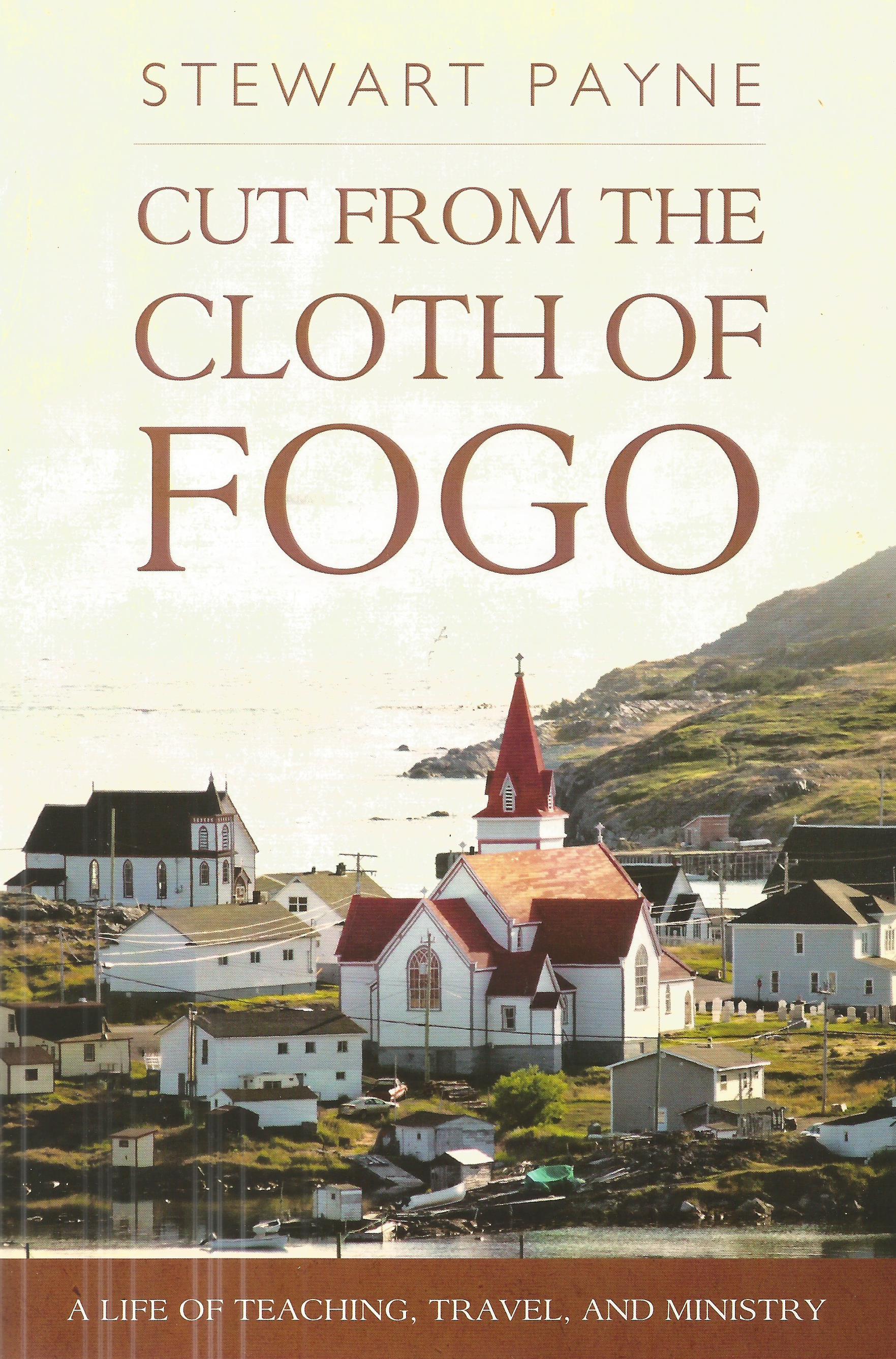
PayneA large percentage of the books in my personal library are memoirs of the great, the not-so-great and, in some instances, the ingrate. Both biographies and, especially, autobiographies can be self-serving, presenting their subjects in the best possible light. Such foible-free works, which are called hagiographies, are of limited value in creating well-balanced portraits.

I recently read the reminiscences of a great man, Stewart Payne. He retired in 1997 as Anglican metropolitan of the Ecclesiastical Province of Canada and archbishop of the Diocese of Western Newfoundland. He is one of the Church of England’s most respected clergymen in Newfoundland and Labrador.

Cut from the Cloth of Fogo, which is published by Flanker Press of St. John’s, is refreshing by its very transparency. Payne recalls his life in a modest and engaging manner, paying tribute to those who helped him on his peripatetic journey.

“My story,” he writes, “is made up of a number of short stories of events that happened to me growing up on Fogo Island and along the way, which have moulded and nurtured my physical and spiritual growth.”

Two incidents in particular resonate with me.

First, soon after the federal government declared a moratorium on the cod fishery in 1992, Payne joined the Roman Catholic bishop of the Diocese of Grand Falls, Faber MacDonald, in forming a coalition for fishing communities to help its unemployed fisherfolk and fish plant workers. Such social awareness is to be commended among clergy who, all too often, restrict their activity to spiritual matters.

Payne’s stated priority in life has been to “contribute to the common good.” It is worth noting that he sees his life as a way of serving “in the corporate life of the church and outside.” The church coalition he helped form reflects the twin foci of his religious and social sensibilities. To their credit, several churches, including Pentecostal, the denomination I served as an ordained minister for 35 years and which typically shies away from ecumenical activities, sent representatives to the formative meeting.

The coalition determined to listen to those affected, represent them to governments, and do all within their power to ensure conservation laws were followed. Payne is convinced that the coalition “made an intensive and effective effort in bringing the tragedy of the moratorium and the plight of our people to the attention of governments and the Canadian public.”

The second feature of Payne’s memories which especially registers with me is the loving tribute he pays to his wife, who late in life developed dementia and sadly had no comprehension that her husband was even writing his autobiography.

In a short but moving chapter, entitled “Selma,” Payne recalls that, by 2006, it was patently evident that she was having significant memory-related issues.

“She has progressed to the point of seemingly having no recognition and no real communication, though one can never be sure of those things.”

In his own twilight years, Payne perceives his ministry to be caregiver to his Selma, nothing more nor less.

“God’s will,” he suggests, “is always for our wellness and healing.” In a profound addendum, he writes, “Healing takes place again and again, not always resulting in a cure.”

In his Foreword, Don Downer describes Payne’s book as “a sensitive amalgam of the personal and of the professional.” The churchman “has served his family and the people well” and, I might add, in that order, family first, other people second.

There is much more about this book to capture the reader’s attention and admiration, but these two alone–Payne’s social awareness and devotion to his ill wife–make its reading eminently worthwhile.

A Not-so-effective Treatment for Colic

For the first six months of her life, our daughter, Krista, suffered from colic. For those of you whose children have never been afflicted with this condition, congratulations are in order. For those who have walked this road, my sympathies are with you. For those unfamiliar with this malady, please allow me to explain it.

Our family medical bible defines colic as “acute pain in the abdominal cavity…. An attack of infant colic is usually mild, although it may look severe and be accompanied by prolonged crying, abdominal distension, reddening of the face, and legs drawn toward the abdomen.”

Our adorable daughter cried day and night as she exhibited all the above symptoms. Sucking in and expelling air, she cried plaintively, “Ah-laah! Ah-laah! Ah-laah!,” with the emphasis on the second syllable.

Sherry and I did all within our power to alleviate her pain.

After three months of Krista’s steady screeching, our family doctor felt her belly and said, “It’s as hard as a drum…a sure sign of colic.”

Gripe Water was our first remedy of choice. Sometimes it worked–most times it didn’t. We often walked through the Avalon and Village malls in St. John’s with Krista in her stroller. The steady movement helped her, but she cried her heart out whenever the stroller stopped.

My visiting sister, Karen, would ask, “Where’s the Gripe Water?” Unscrewing the cover, she would poke the dropper into Krista’s mouth. We now wonder what shoppers must have thought, Whatever are they giving that poor child to drink? It isn’t white, so it can’t be milk. If it’s water, then why is she gagging on it?

A second remedy was to place Krista on my stomach while I reclined on the chesterfield and gently rocked her to sleep. The warmth of my girth worked a temporary miracle. As long as I was in motion, she slept soundly. But the moment I stopped…”Ah-laah! Ah-laah! Ah-laah!”

CastoriaA third remedy was a dark substance called Castoria. This mild stomach medicine for children is used to break up gas.

I had recently returned to Memorial University to begin graduate studies. The three of us–Mom, Dad and Baby–became exhausted from the perpetual crying, lack of sleep, and study. Sherry and I were at our wit’s end.

Arriving home from class one day, I opened the door and heard the inevitable “Ah-laah! Ah-laah! Ah-laah!” Sherry, hearing me enter the house, ordered, “Burton, bring in the Castoria.”

“On my way,” I promised dully.

I knew exactly where the Castoria was located. I had grabbed it from the fridge numerous times. It had never been moved from its coveted spot in the corner of the door shelf.

In a daze, I stumbled to the fridge and yanked open the door. Without looking at what I was doing, I reached inside, located the elixir, removed the cover, and poured the requisite amount–well, perhaps a little more this time–into a dropper.

I trudged to our bedroom. Sherry was sitting up in bed, cuddling Krista, humming, rocking her back and forth, trying to sooth her. I passed her the dropper. “Here, give her this,” I said.

Sherry touched the dropper to Krista’s lip, waiting for her to adjust to the taste. The substance started to spread across Krista’s lips.

Suddenly, she began coughing, sputtering, choking, gagging. Sherry moved the dropper away from her. Krista clamped her lips, which had turned black by now.

Oh, my glory! I thought. What have I done?

I knew from experience that Castoria tasted rather pleasant. In fact, the manufacturers prided themselves on its “original root beer taste.”

“Burton,” Sherry said, with a look of horror on her face, “what did you give me?”

“Castoria, of course,” I responded.

“That’s not Castoria!” she exclaimed.

“It is,” I insisted.

“It can’t be–it’s too thick.”

“I tell you, it is. I found the bottle in the same place as a hundred times before.”

Gravy browningI ran for the bottle to double check. Skeptical, Sherry touched the substance in the dropper to her own lips. A grimace, then she stated flatly, “This is not Castoria.”

“Well, then, what is it if it isn’t Castoria?”

“It’s gravy browning!”

Forgotten Bookmarks

Dollars0002I’m sure all of us have had the same experience at some point in our lives. We grab a book and sit down to read when, all of a sudden, something interrupts us. What to do? We reach for the closest thing at hand to mark where we left off reading. It might be an actual bookmark. Or, it might be something more prosaic, like a bus ticket, card, letter, envelope, receipt, recipe, photograph, flyer, advertisement… The possibilities are as varied as the people who use bookmarks.

Eventually, the book might find its way into the world at large. It might be donated to a public library. It might end up in a flea market or a garage sale. Or, it might land on other people’s bookshelves or in a used bookstore.

But, I often wonder, what becomes of those so-called forgotten bookmarks? What stories could they tell?

I have a story to tell. Several years ago, I had my own experience with a forgotten bookmark.

I was standing in front of a library shelf. The entire collection of books was being sold. One book in particular caught my eye. I pulled it off the shelf and riffled through it. It was definitely one I wanted for my personal collection. The asking price–a mere 50 cents–was no object. However, on second thought, I changed my mind and returned the volume to the shelf.

The next day, temptation strong assailing me, I went back to the library to see if “my” book was still there.

It was, so this time I forked over the half dollar and took the book out to the car with me.

On my way home, curiosity got the better of me. As I lifted the book and idly flipped the pages, a sealed envelope dropped out. I stopped the car and ever so gently opened it. Imagine my surprise when, from within, there fluttered to my lap a sizeable collection of bills in varying denominations, beginning with the lofty $100 and descending to the lowly $1.

I was faced with a quandary. I knew the book was now mine, as I had bought and paid for it. But were the unexpected contents within mine, as well?

I allowed my mind to do the wondering for me. If a bus ticket, card, letter, receipt, recipe, photograph, flyer or advertisement had emerged from the book, would I have returned it to the seller? No. There was no relative value to such common objects. Well, I rationalized, why should I return the envelope containing the money?

Meanwhile, I wanted to do the honourable thing. After all, there is, in the book I had bought for 50 cents, a section headed “Honesty,” and another on “Conscience.” According to the author, “The conscience in man is his Holy of Holies.”

I began an intense search for identifying marks. There were none on the book showing the original owner. The envelope was pristine both inside and out. And, the bills were in mint condition. So, I convinced myself, there’s no way to track down the owner of the book, a first edition with a copyright date of 1953.

Recently I was reminded of my lucky find when I read Forgotten Bookmarks: A Bookseller’s Collection of Odd Things Lost Between the Pages. The author, Michael Popek, presents a veritable scrapbook of his most interesting finds. There are, for example, ticket stubs, notes, valentines, unsent letters, four-leaf clovers, and various sordid, heartbreaking and bizarre keepsakes. This collection of lost treasures offers a glimpse into other readers’ lives that they never intended for us to see.

Back to my find: in my most reflective moments, I wonder about the owner of the money I found in the book. Why was it placed there in the first place? What was it intended for? What did the owner do when he or she realized the envelope and, especially, the money were misplaced? How did they deal with their loss?

Meanwhile, I have no qualms about admitting what I did with the money: I took it home with me and used it to buy groceries. However, I still wonder if what I did was right. Was there something else I could have done? For example, even if I had returned the book to the library, would the librarian have been able to identify the owner of the book?